Most drivers don’t think about cameras and sensors when they’re driving through the High Desert. You’re watching traffic, fighting the sun glare, maybe bracing for a gust of wind pushing the car sideways.
But your car is doing something else at the same time.
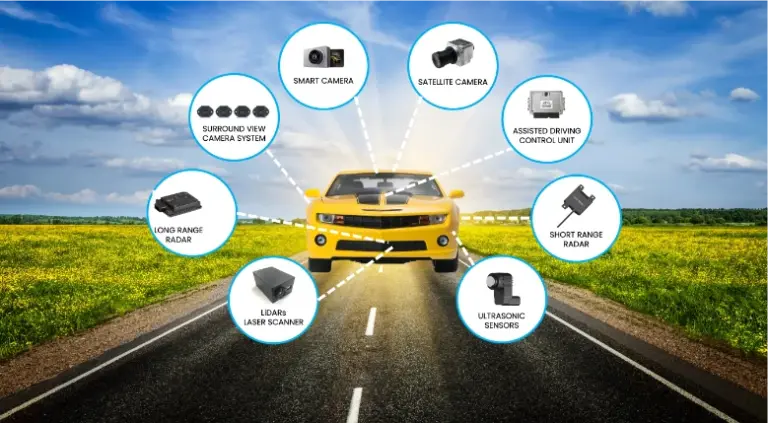
It’s constantly using cameras, radar, and sensors to judge distance, speed, lane position, and braking. That whole system is called ADAS, Advanced Driver Assistance Systems, and out here, the High Desert puts it to the test.
Between elevation changes, wide open roads, temperature swings, and intense sunlight, this environment can throw ADAS out of alignment faster than most people expect.
Here’s why that matters.
Elevation changes matter more than you think
The High Desert isn’t flat, even when it looks that way.
You’re constantly moving between different elevations as you drive through Victorville, Hesperia, Apple Valley, or out toward the mountain passes. ADAS systems rely on precise angles and distances. Small changes in ride height or sensor positioning can affect how the system reads the road.
After a windshield replacement, suspension work, or even certain tire changes, those elevation shifts become more noticeable to the system. If calibration is even slightly off, features like lane keeping or adaptive cruise control may respond late or inconsistently.
Extreme temperature swings affect sensors
Cold mornings. Warm afternoons. Sometimes both in the same day.
Those swings cause materials to expand and contract. Windshields, brackets, and camera mounts all move, even if it’s barely visible. ADAS cameras are mounted with tight tolerances, so that movement adds up over time.
A system that was right on the edge during installation can drift out of spec after weeks of High Desert weather. That’s why proper calibration matters here more than people realize.
Sun glare plays a bigger role than drivers expect
If you’ve ever driven east in the morning or west in the evening out here, you already know.
The sun sits low and hits hard. ADAS cameras depend on clear visual data. Strong glare, dust on the windshield, or slight distortion in the glass can interfere with how the camera reads lane markings and vehicles ahead.
If the camera is not calibrated precisely, glare makes the issue worse. That’s when you start seeing warning lights, disabled features, or systems that behave inconsistently.
Wide open roads can hide calibration problems
One of the trickiest things about ADAS issues in the High Desert is how quiet they can be.
Long, straight roads and lighter traffic don’t always trigger obvious failures. A system can be miscalibrated and still seem fine until you hit tighter lanes, sudden braking, or heavier traffic.
By the time something feels off, the system may have been inaccurate for longer than you think.
Why proper ADAS calibration matters in the High Desert
After a windshield replacement, ADAS calibration isn’t just about clearing a dashboard warning. It’s about making sure your vehicle understands its environment.
Out here, that environment includes elevation changes, harsh sunlight, temperature extremes, and long stretches of highway mixed with sudden traffic shifts. Skipping calibration or cutting corners increases the risk that safety features won’t respond the way they should when you need them most.
The takeaway
ADAS systems are designed to assist, not guess.
In the High Desert, where conditions quietly challenge those systems every day, proper calibration is what turns technology into real safety. If your windshield has been replaced or your vehicle has had work that affects cameras or sensors, calibration is not optional here.
Your car needs to see the High Desert clearly, just like you do.